
What does OSHA require for handwashing on a job site?
The baseline rule is 29 CFR 1910.141(d)(2): washing facilities need soap and either towels or a hand drying device. That is general industry language, and it applies whether you are running a five-person remodel or a fifty-person build. Hand sanitizer stations, on their own, do not satisfy it. If your crew is applying paints, coatings, herbicides or insecticides, OSHA 1926.51(f)(1) kicks in separately and requires washing facilities near that specific work, because those contaminants need real soap-and-water removal. Construction toilet counts run on a different rule, OSHA 1926.51(c), which is worth reading if you are also renting portable toilet rental units for the same site. Santa Monica Porta Pros delivers handwashing station rental units built with soap dispensers and paper towel rolls already loaded, so the crew doesn't hand you a compliance problem on day one. Pair one station per toilet cluster and you cover both rules without overthinking the math. For a broader look at what a jobsite needs beyond hygiene, see construction site services.
How many handwashing stations does my site need?
Match stations to your toilet count, roughly one per cluster of units, and add more if paint or pesticide work is happening anywhere on site. A crew of 20 or fewer construction workers needs one toilet facility under OSHA 1926.51(c)(1); pair that facility with at least one washing station nearby. Agricultural operations follow a different ratio: OSHA 1928.110 sets field sanitation at one facility per 20 hand-labor employees, reachable within a quarter mile walk, and a handwashing setup belongs at that same stop. If you're running a farm crew near Santa Monica, check farm and agricultural restrooms for the toilet side of that rule. Event organizers should think in terms of crowd density rather than headcount alone; a festival footprint spread across a park needs stations distributed at intervals, not clumped at one entrance. Our portable sink rental units work well for that spread-out layout, and a hand sanitizer station rental can supplement, though it never substitutes for the soap-and-towel requirement.
Where should stations be placed on site?
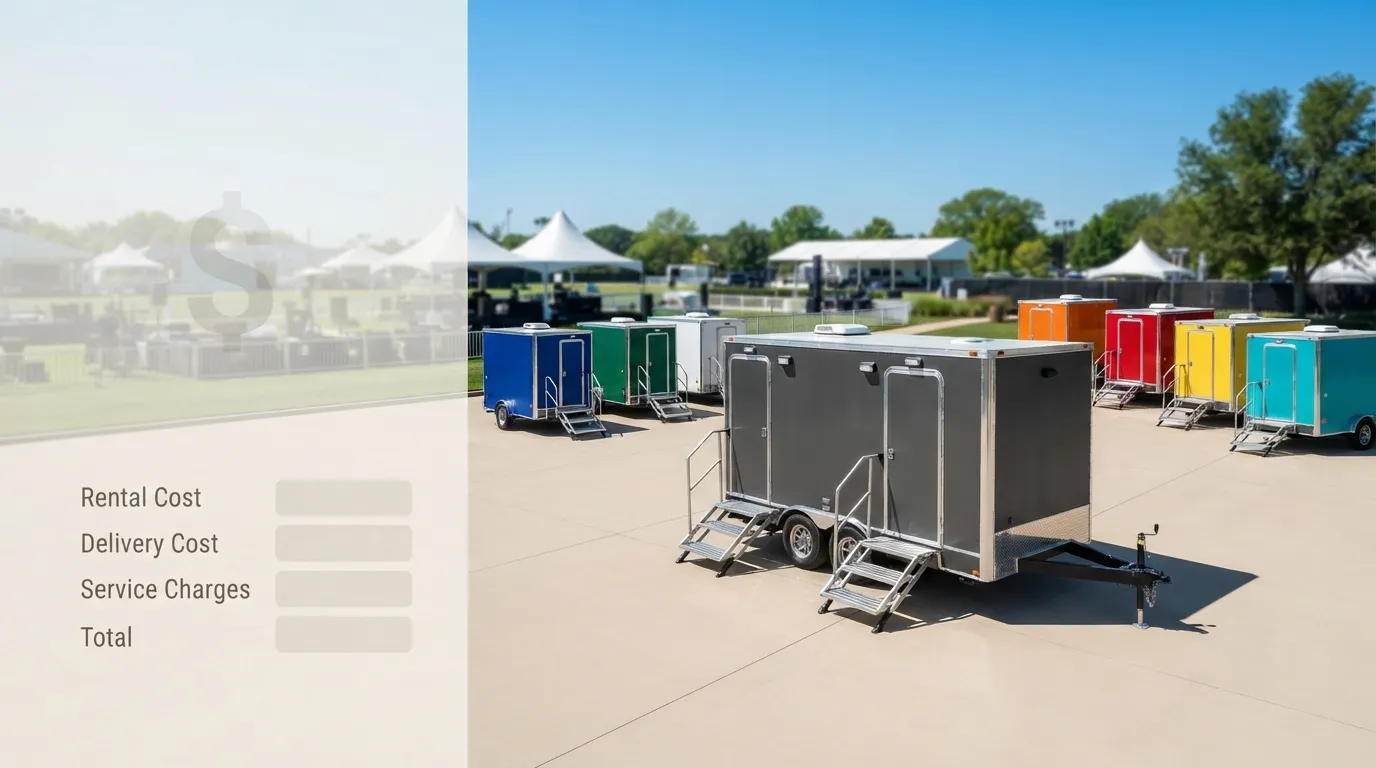
Put them next to the toilets, next to any food service point, and within an easy walk of active work areas, not tucked behind equipment. ADA Standards section 403.5.1 sets a 36 inch minimum clear width for the accessible route leading to a station, and ADA Standards section 404.2.3 requires a 32 inch clear door opening on any accessible unit along that path. If your site includes an ADA-compliant restroom, ADA Standards section 213.2 requires at least one accessible unit in any cluster of single-user toilets, so plan the handwashing station right alongside it. Our ada accessible porta potty page covers unit specs; ADA Standards section 304.3.1 calls for a 60 inch turning circle nearby, so leave that clearance when you're scouting a spot near the loading zone or delivery path. Ground surface matters too: ADA Standards section 302.1 requires a stable, firm, slip-resistant surface, which rules out loose gravel or soft turf for placement. If you're staging a delivery in Santa Monica and need clearance guidance generally, our porta potty placement guide walks through the same logic for toilet units.
Do event permits in Santa Monica require handwashing stations?
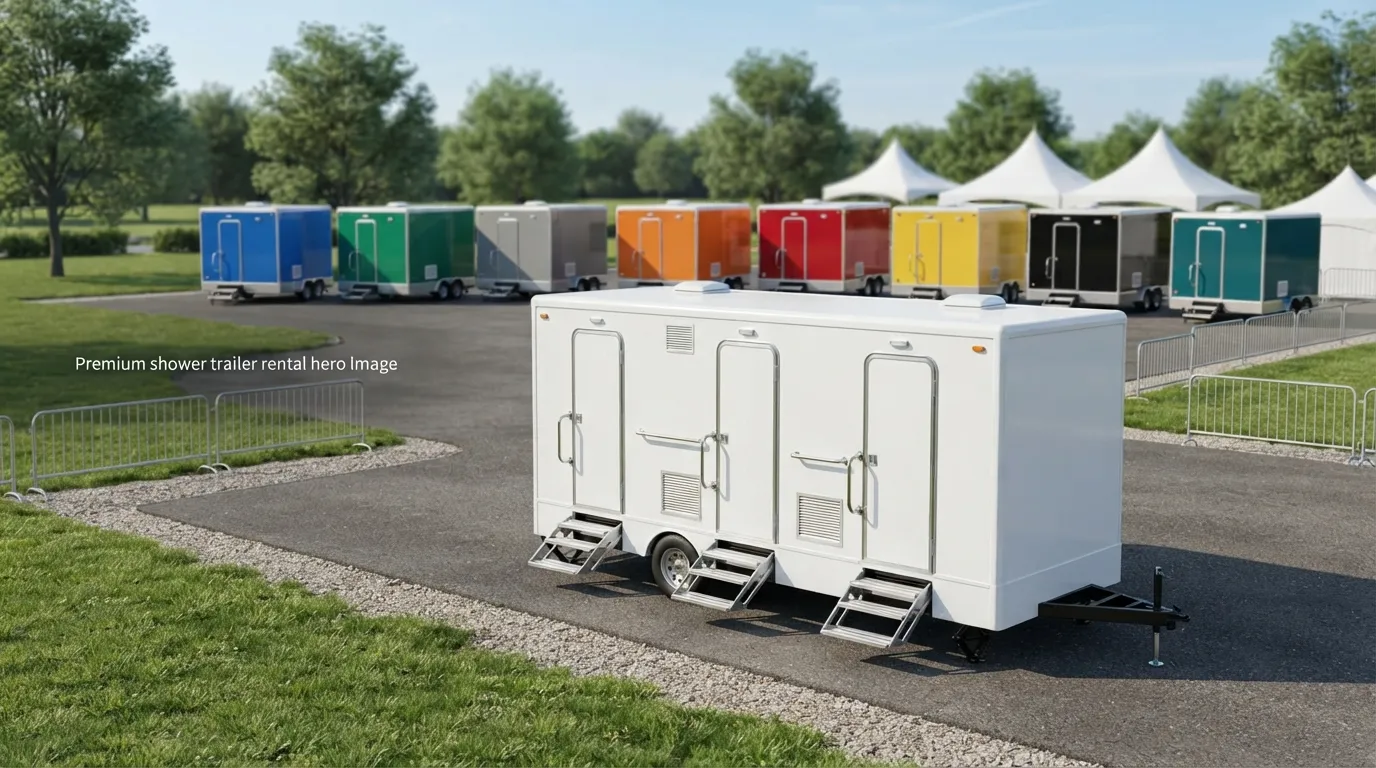
Permit requirements vary by venue and event type in Santa Monica, and this needs confirming directly with the city before you finalize a layout. We are not the source for permit language, so treat any citation you hear secondhand with caution. What we can speak to is equipment: our event restroom rental packages bundle handwashing stations with toilet units as a matched set, sized to your expected headcount. Weddings, filming days and races each carry different footprint needs; see wedding restroom rental, film set restroom rental and marathon and race restrooms for use-case specifics. Festival organizers running multi-day events in Santa Monica should look at festival restroom rental for stations rated for sustained crowd traffic rather than a single afternoon. Culver City sits 7.5 miles east and runs comparable permit processes, so if your event footprint crosses jurisdiction lines, budget extra lead time to confirm both cities' rules rather than assuming one covers the other.
| unit | duration | typical price |
|---|---|---|
| standard toilet | day | $150 |
| standard toilet | week | $200 |
| ada unit | day | $230 |
| delivery fee | day | $150 |
Prices above sit within our measured range; see porta potty rental cost for the full breakdown by duration and porta potty rental per day if you're comparing single-day options against a weekly rental at monthly porta potty rental.
Does hand sanitizer count as a handwashing station?
No. 29 CFR 1910.141(d)(2) specifically requires soap and towels or a drying device; sanitizer gel does not meet that standard on its own. It works as a supplement between full washing breaks, especially near food service, but OSHA inspectors look for the soap-and-water setup first.
How often do handwashing stations get serviced?
Weekly service is the baseline for portable sanitation under ANSI/PSAI Z4.3, covering up to 10 users across a 40 hour week. Higher headcounts or messier work, like coating application under 1926.51(f)(1), need more frequent visits. Ask about your specific crew size when booking.
Can I rent just a handwashing station without toilets?
Yes. Many customers order stations standalone for food trucks, farmers markets or small crews already using indoor facilities. Delivery and pricing follow the same structure as our toilet rentals; check handwashing station rental for current setup options.
What is the difference between a portable sink and a sanitizer station?
A portable sink has running water, soap and towels, meeting 29 CFR 1910.141(d)(2) outright. A sanitizer station dispenses gel only and does not satisfy that standard alone. Most job sites need the sink; sanitizer stations work as an add-on near entrances or food areas.
Do construction sites near Beverly Hills follow the same rules?
Yes, OSHA standards apply regardless of city line. Beverly Hills sits 9.1 miles northeast of Santa Monica, and any crew working there follows the same 1926.51(c) and 1910.141(d)(2) requirements. Local permit steps may differ, so confirm those separately with each city's office.
Next step
Get a delivery date
Tell us the address, the dates and the headcount. We size the order and confirm the route.